Locked in by design

Consumer group Which? has accused the tech giant of "trapping" users into its cloud service. It says 40 million iCloud customers could be entitled to roughly £77 each if successful.
-- BBC News UK (https://www.bbc.co.uk/news/articles/c932d1r0p96o)
£77 ($102) isn't a whole lot of money, & doesn't address the ongoing issue of millions of people who are locked in to iCloud. But £77 is what users, from recent year, would be eligible for if the class action lawsuit is successful.
The real message is what the money says to all users of iCloud (opted into to the lawsuit by default): Apple have done something wrong, & what they do is exactly what other companies are doing.
When I migrated off of iCloud, I had the painful experience of losing metadata from thousands of photos. The reason for this was simple: Apple chose not to include info like the original date the photo was taken or the location in the export of images. Why? Because the photos were leaving their ecosystem. On top of that, I could only export a max of one thousand photos at a time. If I had wanted to sync a vastly greater number of photos into iCloud, these restrictions would have magically disappeared.
Friction for friction's sake.
Here are some comments that stood out to me on the news article:
"The real issue is how difficult it is to transfer files to a hard backup without using a pc or Mac. Transferring photos and videos to a usb drive should be easy but Apple devices make it so much more difficult and unreliable than it needs to be. Force Apple to include easy usb drive / external hard drive connectivity with every device and then we won’t need iCloud storage."
"Apple purposely designed key features such as device backup, Find My, photo syncing and device migration around iCloud. They chose NOT to use available interchangeable cloud standards. The only convenient option being paid iCloud storage Had Apple architected these to work seamlessly with Google Drive, OneDrive or Dropbox, users could have chosen lower-cost options with equivalent functionality."
Comments like these give me hope. It reminds me that more people are invested in these problems than I realise.
One more:
I have iCloud and it's a great service. I'd ask people like Which to leave it alone as I want to continue to use all its advantages.
If I didn't want iCloud I wouldn't have an iPhone.
To me, this response suggests that the commenter believes that Which? would have something to find if they continued to press Apple. And rather than find the truth behind Apple's practices, they'd rather keep their relatively seamless experience. But it's Apple's bad practices that created this situation in the first place, where the only smooth path is Apple's own.
"If I didn't want iCloud I wouldn't have an iPhone" is an oversimplification. We consumers have very few choices in the hardware available. There may be many types of models, but the decision comes down to a few options: Apple's ecosystem, Google's, or an open source alternative where experiences vary & troubleshooting is expected.
If it wasn't for the call to actively not investigate one of the largest companies on the planet, this comment wouldn't have caught my eye. Everyone is entitled to their opinion & I respect anyone who makes the informed decision to share their data & opt-in to a closed ecosystem. I hold some of my closest friends among these.
If we had interoperability between cloud providers, we could easily make backups of our files across clouds, or switch providers for better deals, like how many choose to do for utilities like gas, electric or internet provider.
The tech companies would be racing each other to be cheaper, more feature-rich, more respecting and reliable. Instead, we have a situation where moving from one cloud to another is an exhausting idea.
My personal vision for the future is that more home cloud setups will be the norm, as seamless as the massive clouds we live under today.
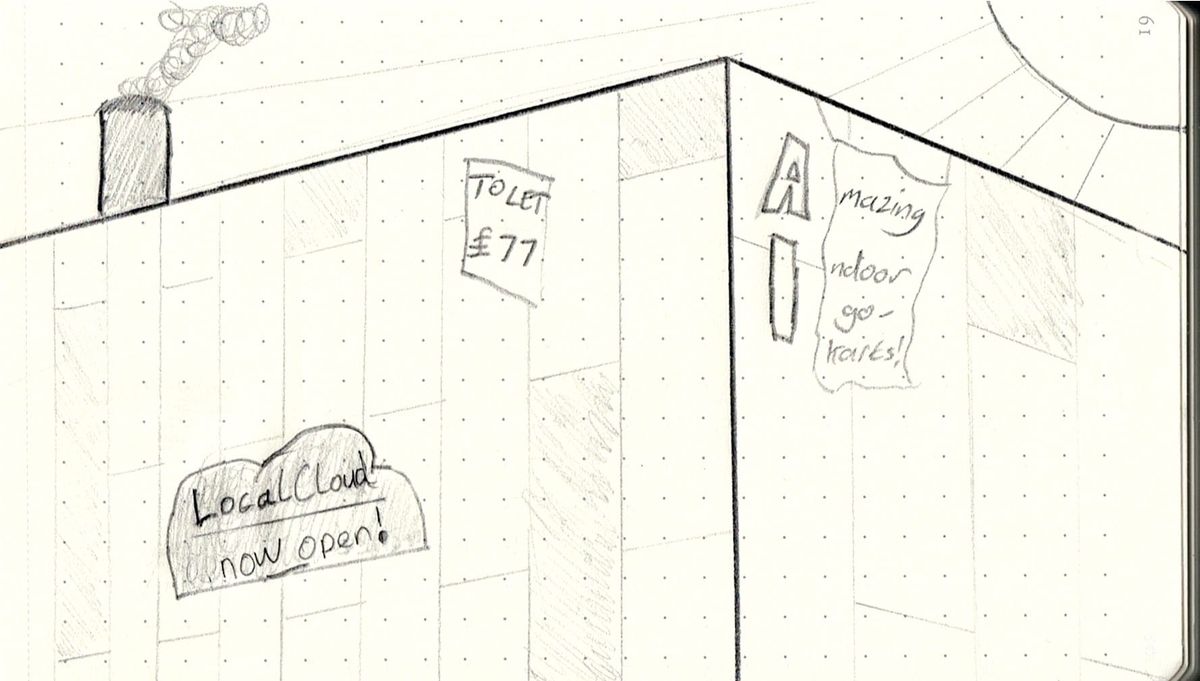
For others who would continue to rely on centralised clouds, these could be region-specific, accountable to local laws & taxation. You may well one day know someone, personally, who works at your local cloud provider. They joined an exciting startup who moved in to one of the soon-to-be defunct AI datacentres. They only needed a fraction of the space, so they play laser tag & go karts on their lunch break, since that's what the rest of the abandoned warehouse has been turned into.