Growth incentives could be better

The YouTube app on my TV has a consistent feature: if I long-press on a video thumbnail I'll get a pop-up window of options, like adding the video to a queue or going straight to the creator's channel. Except when I'm already watching a video & I long-press a recommended video on the screen. I've learned now that when I long-press one of these videos, out of habit, I have committed to leaving the current video, which is usually not what I wanted. I'm forced to load the next video & then go back.
Is this bad design? That depends. It depends on who the design is for. For me, this is an annoyance of the app, but I don't believe I'm the target. Google developers could have easily designed a consistent experience across the app, & might even have had to add an exception clause to the code in the case of a video recommendation.
This is of course speculation. I do not have access to YouTube's app code that runs on my TV. This "dark pattern" of behaviour however has been well documented:
In mid-2024, Meta Platforms announced plans to utilize user data from Facebook and Instagram to train its AI technologies, including generative AI systems. ... Users were given until June 26, 2024, to opt out of the data processing. However, critics noted that the process was fraught with obstacles, including misleading email notifications, redirects to login pages, and hidden opt-out forms that were difficult to locate. Even when users found the forms, they were required to provide a reason for opting out, despite Meta's policy stating that any reason would be accepted, raising questions about the necessity of this extra step.
-- https://en.wikipedia.org/wiki/Dark_pattern
Cory Doctorow explains what he feels are the true motivations behind these design choices:
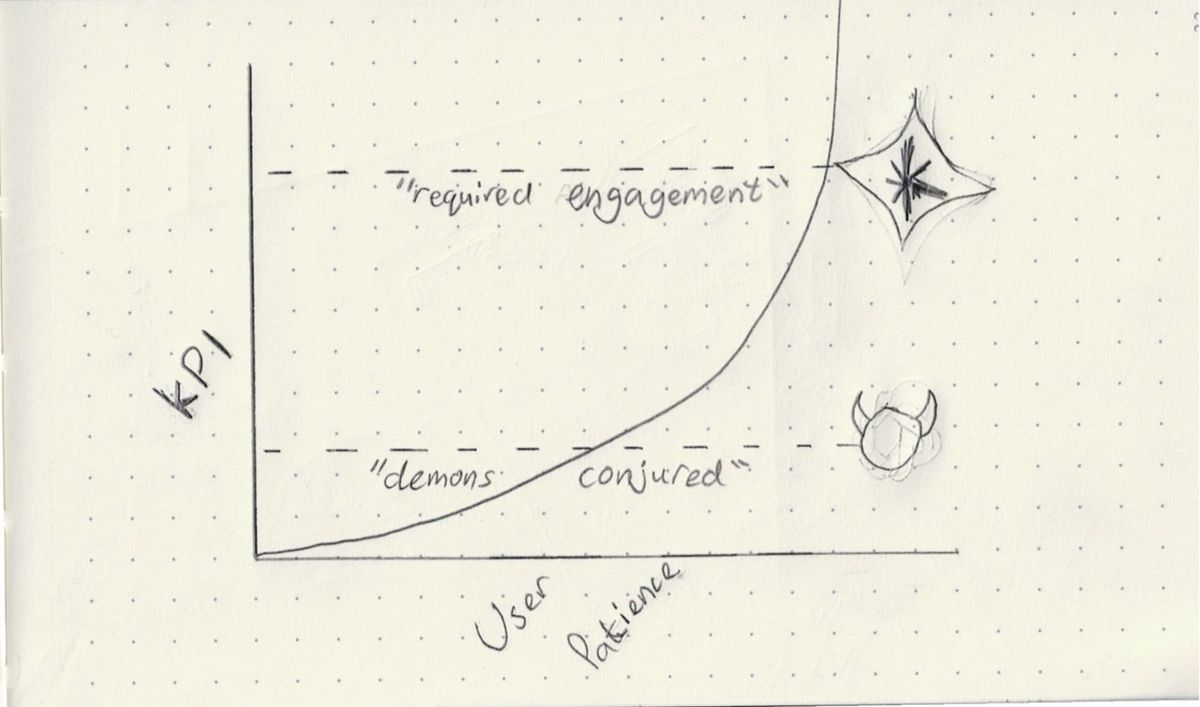
I've accidentally conjured an AI demon [on a Google Pixel] by [lists six different ways].
Every time I make an AI appear on my screen, a team at Google gets a little KPI score boost, and a process at Google gleefully notes the fact that I have "engaged" with AI. ... At some point near the end of the quarter, a team at Google will comb through these statistics, pick the most impressive-seeming, and make a beautiful series of charts illustrating them: "Users who interact with Google AI returned to it an average of six times in the first week, and their engagements doubled every week."
-- The Reverse Centaur's Guide to Life After AI by Cory Doctorow (https://www.kickstarter.com/projects/doctorow/the-reverse-centaurs-guide-to-life-after-ai)
Cory argues that since many of the top developers have substantial stock options in their companies, they are personally incentivised to implement these kinds of features, to boost KPIs & to tell a story that things are exactly as investors want.
Another example, from Microsoft, is that on GitHub the "Actions" tab (for automated workflows) at the top of most of their pages has existed in the same place for years. At the beginning of 2026 that changed to the "Agents" tab – playing with years of muscle memory, leading me to click on a similarly named, AI-focused tab, when what I really want to click on was shunted off to the right (https://github.blog/changelog/2026-01-26-introducing-the-agents-tab-in-your-repository/).
I don't think it matters that I'm already hitting the back button before the Agents page has loaded.
For Microsoft, just like Google, Meta, & countless other companies, the metric has already increased.
Not longer after posting this article, GitHub quietly changed their UI to put the Agents tab at the end of the list of tabs, under a "More" drop-down.
I was clearly far from alone in having this frustration.
What Cory explores in The Reverse Centaur's Guide to Life After AI is the idea that the targets of these kinds of features are not users, but investors. The easiest way to present to investors that the company is growing is by showing a chart going up.
How the chart got to its peak is a difficult question to ask. "Are our users happy?" is a difficult question to answer, it's subjective. "Are our users engaging with us more than last month?" is an easy question to answer, once you've begun tracking every motion & interaction of your users & defined what "engaging" means to you, the answer comes down to whether the number is bigger than the previous measurement.
Investors likely don't care about user happiness. They invested for a return. What they want is assurance that the companies they have a stake in are growing. If they ever reach a mature stage they will start to struggle to expand into new areas, hiring talented people with the allure of ever-growing shares & they'll no longer be able to get their existing staff to keep adding user-tricking pathways in their platforms – staff who I believe on average care about users & were originally drawn in by good-intending, ambitious company slogans like:
"Build the future of human connection and the technology that makes it possible"
-- Meta (https://www.meta.com/en-gb/about/company-info/)
or
"We’re committed to significantly improving the lives of as many people as possible"
-- Google (https://about.google/company-info/commitments/)
These incentives could be better.
I don't expect companies to start working at odds with their investors, but I think that these tech companies that begin by creating a big user base, which attracts investors, could be more honest with both groups of these people.
Investors should know that growth of a new technology is genuine, & that inflating the numbers by counting a fleeting moment of (accidental) interaction with a feature is dishonest.
Users should know that a new feature is being encouraged. They could be incentivised to opt-in, maybe having a chance to win a premium subscription feature for free for a time, or earn some form of "credits" for answering surveys or trialling out early-access content, & be able to exchange these "credits" to skip ads, etc.
If I were an investor, I'd be glad to hear user feedback showing that something is actually working, or want to advise if it wasn't.
As a user, I expect companies to want their latest & greatest products / features to be at the forefront of their attention – & ideally at the forefront of mine. This doesn't need to be hidden. If it's good, something new should be worth using.
If it's a feature that's confusing*, then instead of placing itself under the thumbs of unsuspecting people, it clearly needs more development, or showcasing – but in reality, maybe the whole feature is simply to drive a metric to keep investors happy.
*maybe it's an AI feature that allows anyone with a VPN-connection to add their email address to my Meta account (https://cybersecuritynews.com/metas-ai-support-bot-instagram/) just by asking nicely.
If you want to see more examples of Dark Patterns: https://www.deceptive.design/hall-of-shame/.